How a $1.5 Million Factoring Facility Helped an Infrastructure Contractor Navigate Significant Tax Arrears

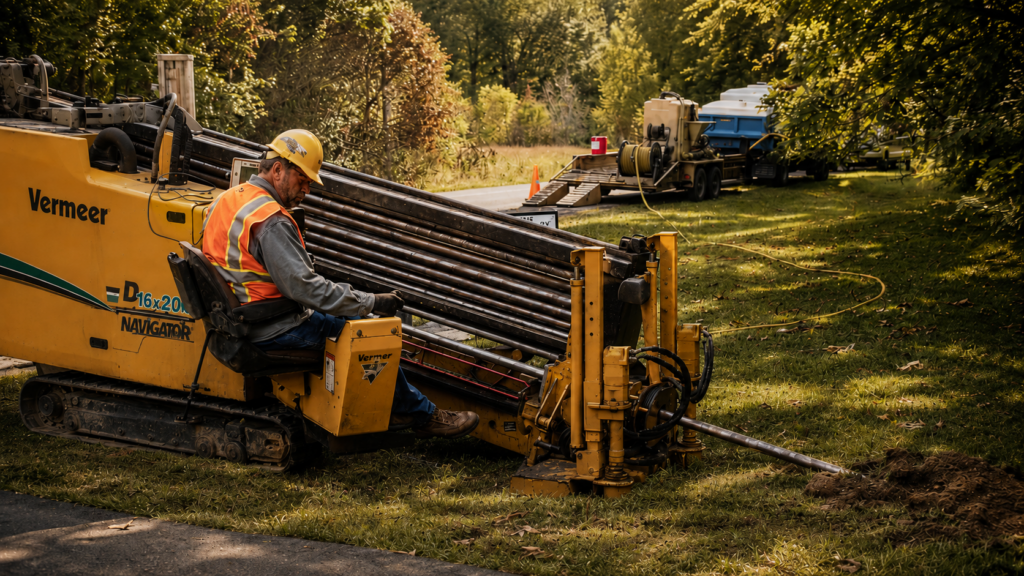
Factoring with tax debt can provide working capital when an otherwise viable business has substantial receivables but limited access to conventional funding.
For a growing business, it can restrict access to working capital at precisely the moment cash is needed most. This is particularly serious for contractors that must fund payroll, equipment and subcontractors weeks or months before their customers settle their invoices.
That was the position facing PrairieLine Boring, an Oklahoma-based directional boring contractor serving large infrastructure operators.
The company had been trading successfully for approximately 10 years. It employed around 20 people and regularly engaged a wider network of specialist subcontractors. Its underlying business was viable, with established customers and a healthy pipeline of work.
However, following a period of slower activity, it had accumulated significant payroll tax arrears after prioritising payments to subcontractors.
When tax arrears affect access to finance
Federal tax arrears can have implications well beyond the amount owed.
A federal tax lien is the government’s legal claim against a taxpayer’s property. In the case of a business, it can attach to its assets and rights to property, including its accounts receivable. Once the IRS files a Notice of Federal Tax Lien, other creditors are publicly notified of the government’s claim, which may take priority over competing liens depending on their nature and timing.
For PrairieLine, this created a difficult financing environment.
A conventional lender considering a UCC filing would need to understand where it ranked relative to the IRS and whether the receivables supporting its facility were already subject to a competing claim. The tax position therefore made an otherwise sound business considerably harder to finance.
The company did not simply need a lender. It needed a funding partner willing to understand the complete situation and structure a workable solution around it.
A business worth protecting
The importance of finding that solution extended beyond the founders.
PrairieLine employed around 20 people directly. It also supported numerous subcontractors whose own businesses depended on the regular flow of projects and payments from PrairieLine.
Its customers were large, credible infrastructure managers. The work was being completed and invoices were being raised, but the delay between performing the work and receiving payment was placing increasing pressure on the company.
Without sufficient working capital, PrairieLine risked being unable to take on new projects, pay subcontractors promptly or maintain the operational capacity its customers expected.
The challenge was to create liquidity without disrupting those customer relationships or placing further strain on the business.
The TowerCap solution
TowerCap worked with PrairieLine, its tax accountant and the other parties involved to understand both the receivables position and the company’s obligations to the IRS.
Rather than viewing the tax arrears in isolation, the team assessed the strength of the underlying business, the quality of its customers, its invoicing processes and the value of its eligible accounts receivable.
TowerCap then established a factoring facility providing PrairieLine with access to as much as $1.5 million in working capital at any given time.
The facility allowed the company to draw funding as eligible invoices were raised.
Most of the arrangement was also structured on a non-notification basis. PrairieLine’s customers continued paying through their normal processes, without TowerCap contacting them or inserting itself into the commercial relationship.
Non-notification factoring is an important part of TowerCap’s proposition for qualifying businesses, particularly where invoices and payments are managed through established customer portals.
More than a funding transaction
The complexity of the situation meant that simply approving a facility was not enough.
TowerCap remained closely involved after the funding was put in place. The team participated in monthly calls with PrairieLine and its tax accountant, helped manage the practical implications of the tax position and worked proactively to keep the different parties aligned.
This relationship-led approach reflects TowerCap’s broader philosophy. The objective is not simply to complete a transaction, but to build a facility that works over time and remain available as the client’s circumstances evolve. TowerCap’s team has described this as finding ways to structure deals that others may avoid, particularly where careful underwriting and ongoing communication can make a meaningful difference.
As one of PrairieLine’s founders explained:
“TowerCap’s relationship-driven approach was instrumental in getting us through a difficult period. They stepped in, understood the situation and were highly proactive in helping us manage it. They joined monthly calls with our tax accountant and consistently went the extra mile. It felt as though they were working through the problem alongside us, rather than simply providing the facility.”
The result
The factoring facility gave PrairieLine the liquidity it needed to continue operating while addressing its tax obligations.
The company was able to:
- access up to $1.5 million in working capital as required;
- continue paying employees and subcontractors;
- protect its relationships with major infrastructure customers;
- take on new work without waiting for existing invoices to be paid;
- avoid unnecessary disruption to its customer payment processes; and
- manage its tax position through a coordinated, structured process.
Most importantly, the facility helped preserve a fundamentally viable business.
PrairieLine did not have a shortage of work or a weak customer base. It had a difficult balance-sheet and cash-flow problem that conventional financing channels were not equipped to accommodate.
By looking beyond the tax arrears and understanding the quality of the receivables, TowerCap was able to create a practical working-capital solution around the realities of the business.
Facing a complex working-capital situation?
Tax arrears, lender priority issues or an existing UCC filing do not automatically mean that a business is unfinanceable.
The details matter: the timing of the liens, the quality of the receivables, the company’s customers and the structure of the proposed facility all need to be considered.
TowerCap provides flexible factoring facilities for established businesses with strong commercial receivables, including non-notification structures for qualifying clients. Facilities can support up to $5 million in factorable receivables, with rapid underwriting by an experienced team.
Speak with TowerCap to explore whether your receivables can provide the working capital your business needs.
This case reflects a real client engagement. Names and certain identifying details have been changed to protect confidentiality.
You might be interested in

Owe the IRS? Don’t Let a Tax Problem Push You Into Bad Financing

When Short-Term Funding Closes Long-Term Doors