Owe the IRS? Don’t Let a Tax Problem Push You Into Bad Financing


A tax problem can make a difficult cash-flow situation much worse. Your business may still be operating well, customers are paying and new work is coming in. There may be nothing fundamentally wrong with the business.
But if there is an outstanding IRS liability or federal tax lien, the financing conversation can change quite quickly. Banks become cautious, some lenders will say no altogether, and suddenly the funding that is easiest to get is also the most expensive.
The problem is not simply that the business owes the IRS. A tax lien can affect a lender’s position against the company’s assets, including its accounts receivable.
For banks, asset-based lenders and factoring companies, that can become a major obstacle to extending a facility. Before putting money into a business, a funder needs to understand who already has a claim over the assets, what that claim covers, and whether there is a workable way to structure around it.
Some lenders will stop the conversation as soon as they see a tax lien. Others may still offer funding, but at a much higher cost, which is where businesses can get themselves into trouble.
If payroll is due, suppliers need paying and new work needs funding, it is easy to take whatever money is available. Often that means turning to merchant cash advances or other expensive short-term financing.
The business gets the cash it needs today, but the repayments put even more pressure on tomorrow’s cash flow, which means there is less money available to deal with the tax problem in the first place.
Tax issues can take time to resolve
Tax complications are not particularly unusual.
The IRS filed 214,099 Notices of Federal Tax Lien in fiscal 2025, almost 20% more than in 2023. Nearly 4.9 million taxpayers ended the year in installment agreements with the IRS. At the same time, the IRS has been dealing with significant staffing changes and a sizeable backlog of taxpayer correspondence.
That does not mean every tax matter will drag on, but anyone who has dealt with a complicated IRS issue knows that these things are not always resolved quickly.
In the meantime, the business still has to operate, payroll still has to be met and suppliers still expect to be paid. Winning a new contract can create a need for more working capital, not less.
A tax lien does not automatically mean the business cannot be funded
When we look at a company with an IRS issue, the first question is not simply, “Do they owe the IRS?”
How did the liability arise? How much is owed? Is there already a payment arrangement in place? What does the lien cover? Who are the customers? How strong are the receivables? And, most importantly, is there a good underlying business here?
The IRS also has a formal process for subordinating a federal tax lien in certain circumstances. That can allow another creditor to move ahead of the IRS and can sometimes create a path for new financing.
It is not automatic, and it does not work in every situation, but it does mean that the existence of a tax lien does not necessarily end the conversation.
As TowerCap’s Saul Gewer puts it:
“A tax issue doesn’t automatically tell you whether the underlying business is good or bad. We want to understand what happened, what the receivables look like and whether there’s a sensible way through it.”
We have seen this work in practice
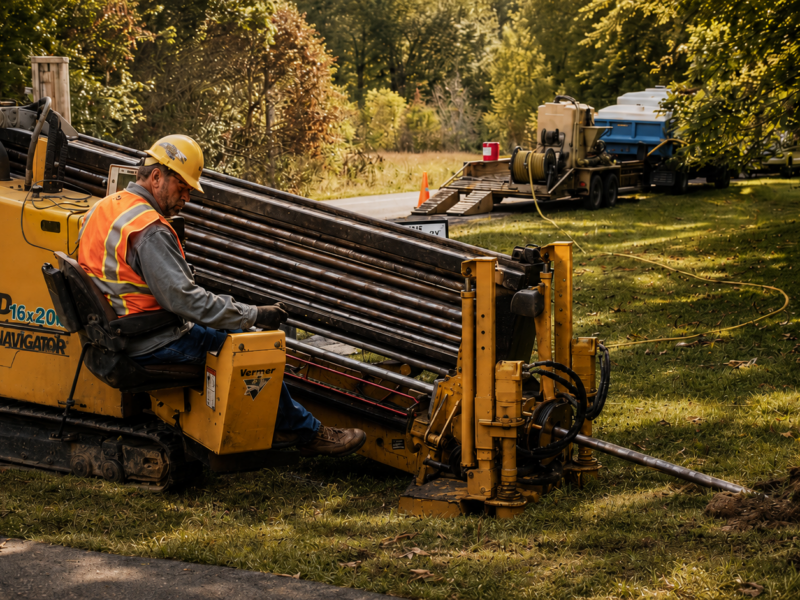
We previously arranged a $1.5 million factoring facility for a directional-boring contractor that had owed a substantial amount to the IRS in back taxes.
The tax issue had to be dealt with properly, but the company had good customers, solid receivables and ongoing work, and needed working capital to cover payroll, equipment and subcontractors while continuing to operate.
Rather than treating the IRS issue as an automatic decline, we looked at the whole situation and found a structure that worked.
That does not mean every business with an IRS problem can be funded. Sometimes the numbers, the lien position or the underlying business won’t support a transaction.
But we do think it is worth having the conversation before assuming that expensive short-term money is the only option left.
Talk to us before you take the expensive money
If an IRS liability or tax lien is making it difficult to obtain financing, there may still be a workable route.
At TowerCap, we look beyond the tax problem and try to understand the business itself: the customers, the invoices, the cash flow and the circumstances that created the issue.
We cannot make the IRS liability disappear, but we can look carefully at the situation and tell you whether there is a sensible way to fund through it.
And if there is, we are prepared to do the work required to get there.
Before a tax problem pushes your business into financing that creates an even bigger problem, talk to TowerCap.
You might be interested in
How a $1.5 Million Factoring Facility Helped an Infrastructure Contractor Navigate Significant Tax Arrears

When Short-Term Funding Closes Long-Term Doors