Is AI Pulling U.S. Growth Forward?


AI investment is already supporting the U.S. economy. The harder test is whether it produces comparable growth once the current buildout begins to slow.
On July 30, the Bureau of Economic Analysis released its first estimate of U.S. economic growth for the second quarter of 2026.
Real GDP grew at an annualized rate of 1.5%, down from 2.1% in the first quarter. Consumer spending accelerated, while investment and exports continued to grow more slowly. Real final sales to private domestic purchasers, a measure combining consumer spending and private fixed investment, increased by 3.9%. The estimate will be revised on August 26.
Thirteen days earlier, the Federal Reserve published one of its clearest attempts yet to measure the effect of the AI buildout on economic growth. Its researchers found that software, data centers, power facilities and computing equipment had made a meaningful contribution to quarterly GDP growth from 2025 through the first quarter of 2026. The contribution varied considerably because much of the equipment was imported.
Another Federal Reserve note, published on July 6, examined whether major technological advances can produce excessive investment. It found that the share of U.S. GDP devoted to intellectual property and equipment investment rose sharply in 2025 and, by the first quarter of 2026, was only slightly below its peak during the technology boom of 2000.
The timing of these releases makes the issue more immediate. AI investment is now large enough to affect how U.S. growth figures are interpreted. But the expenditure is recorded before the economy knows what return it will produce.
AI is visible in the growth figures
The second-quarter GDP report does not contain a line marked “artificial intelligence.”
Investment was led by equipment and intellectual property products, categories that include software, computing equipment and research and development. They cover plenty of activity unrelated to AI, but also much of the infrastructure being developed to train, operate and distribute AI systems.
The Federal Reserve uses several imperfect measures to track this spending.
Capital expenditure by major technology companies includes data center buildings, land, servers and networking equipment. Construction figures capture the buildings themselves, but not the more valuable computing equipment installed inside them. National investment figures capture computers and peripheral equipment, but also include ordinary business technology.
Imports complicate the estimate further. A data center built in the United States contributes to domestic investment. The chips, servers and networking equipment installed inside it may have been manufactured elsewhere.
It is therefore too simple to add software, data center construction and computing equipment together and describe the result as AI’s contribution to American GDP.
Even with those qualifications, the Federal Reserve’s estimate finds a material contribution. AI-related spending is no longer too small to matter in the national accounts.
Investment is arriving before the return
A factory contributes to GDP when it is built, before the goods it will eventually produce reach the market. Data centers, software and computing equipment are treated in much the same way.
The current investment therefore lifts economic output immediately. The productivity gains expected to justify it may take much longer.
Installing an AI system does not automatically improve the productivity of a company. Processes have to be redesigned. Data has to be prepared. Systems have to be integrated. Employees have to learn where the technology is useful and where it is unreliable.
Research frequently finds that AI helps workers complete individual tasks faster. The effect on the company as a whole can be much smaller.
A programmer may generate code more quickly without removing delays elsewhere in the development process. A customer-service employee may answer questions faster while approvals, fulfillment or billing continue at their previous pace.
The Federal Reserve has found little evidence so far that higher productivity in individual tasks has translated into a clear economy-wide effect. Productivity trends in industries with high exposure to AI have not yet separated decisively from those in less exposed sectors. Adoption is increasing, but use within many businesses remains shallow.
The investment is being counted now. Much of the economic case still rests on benefits expected later.
Growth may be moving from the future into the present
This does not make the investment unsound.
Major technologies usually require capital before their wider benefits appear. Electricity, railways, telecommunications and the internet all depended on substantial infrastructure built ahead of demand.
If AI adoption spreads successfully, today’s spending will leave the economy with a productive stock of data centers, software, computing capacity and related infrastructure.
Businesses could then produce more with the same labor and capital. New services and business models could emerge. Economic growth would become less dependent on continuing to build the infrastructure and more dependent on what companies do with it.
The risk is that investment outruns practical adoption.
The largest technology companies are committing capital based on estimates of future demand, future model capabilities and future commercial use. Those forecasts may prove correct. They may also prove correct in direction but wrong in scale or timing.
AI could change the economy profoundly while still leaving the United States with more computing capacity than businesses are ready to use.
The internet eventually justified massive investment in digital infrastructure. It did not justify every investment made during the late 1990s. Fiber networks were overbuilt, companies failed and capital was written down. Much of the infrastructure became valuable later, often to different owners.
The Federal Reserve’s July analysis argues that overinvestment does not necessarily require irrational behavior. Companies investing under uncertainty may make sensible decisions individually and still produce too much capacity collectively, particularly when they are competing for leadership in a market where the eventual winners may capture most of the returns.
The investment is unusually concentrated
Most consumer spending is distributed across millions of households. Business investment is usually spread across a wide range of companies and industries.
The AI buildout is different. A large share is being directed by a relatively small number of technology companies following similar strategies.
Their capital expenditure supports construction companies, utilities, chip manufacturers, electrical contractors, equipment suppliers and data center developers. It has also contributed to stronger manufacturing output in areas supplying the buildout.
This concentration creates a vulnerability.
If expected returns weaken, several major investors could reduce spending within a similar period. The effect would extend well beyond the companies making the decision.
A slowdown in AI capital expenditure would affect the industries that have expanded to supply it. If AI-related productivity were already widespread by then, the gains elsewhere in the economy could soften the decline. If adoption remained limited, there would be less to replace the lost investment.
Data centers create physical constraints
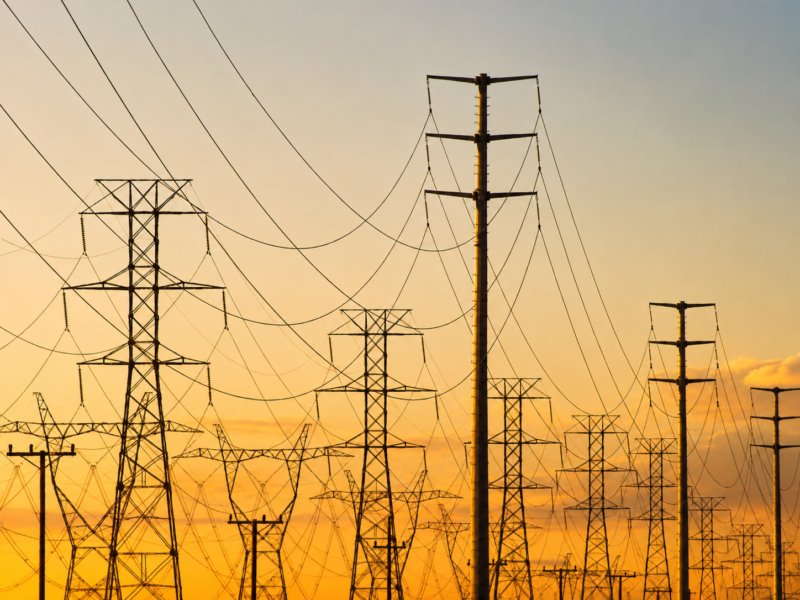
AI is often presented as a software development. Its infrastructure requires land, construction materials, electricity, cooling systems, grid connections, semiconductors and financing.
Demand from the AI buildout is already affecting the prices of some high-technology products. It is also contributing to manufacturing activity and placing additional pressure on electricity supply.
This can make the buildout inflationary in the near term.
Data centers compete for electricity and grid capacity with households and other businesses. New generation and transmission take time to approve and construct. Semiconductor and memory supply cannot always expand as quickly as demand.
AI may eventually reduce the cost of producing many goods and services. Before those savings emerge, the economy has to pay for the infrastructure.
Federal Reserve Governor Michael Barr has argued that strong capital demand and electricity constraints make the AI boom an unlikely reason for lower interest rates in the near term. If AI raises productivity over a longer period, it could also increase the demand for capital and keep the economy’s equilibrium interest rate higher.
Employment may change before layoffs become visible
AI has not yet had a substantial effect on total U.S. employment or unemployment.
The early effects appear more concentrated. Research cited by the Federal Reserve has found weaker employment among early-career workers in highly exposed occupations, including software development and customer service. Some companies are reducing hiring plans or reallocating work rather than dismissing large numbers of existing employees.
This could make the labor-market effect easy to miss.
A job that disappears produces a visible event. A junior position that is never created does not.
Entry-level roles also provide training. Workers learn through routine assignments before taking responsibility for more complex decisions. If AI performs more of that work, companies will need another way to develop experienced employees.
AI could also shorten the learning process. Several studies find that less-experienced workers receive some of the largest productivity gains from AI assistance. The result will depend on whether companies use the technology mainly to remove junior roles or to make junior employees useful more quickly.
The expected productivity gain is not unlimited
The Congressional Budget Office’s central estimate is that AI-related productivity will add an average of 0.1 percentage point a year to U.S. economic growth.
Compounded over time, that would be valuable. Faster adoption and more effective integration could produce a larger result. Difficult or expensive implementation would produce less.
The estimate is modest relative to the scale of current investment and the expectations reflected in parts of the technology market.
AI does not need to disappoint completely for some investments to perform poorly. It only needs to produce returns more slowly, or less evenly, than investors expect.
A useful technology can still be an overbuilt technology.
What happens when the buildout slows?
The current investment cycle will eventually mature. Data center construction cannot accelerate indefinitely, and the largest technology companies will eventually expect existing capacity to generate returns.
By then, one of three conditions is likely to be emerging.
AI may have spread widely enough for productivity growth to replace infrastructure spending as an economic support.
The technology may prove valuable, while the capacity built around it proves excessive.
Or productivity may rise strongly, but mainly within a small number of companies and industries, allowing GDP and corporate profits to grow without equivalent gains in employment and household income.
The second-quarter GDP release does not tell us which outcome is more likely. It does show why the issue can no longer be treated only as a forecast about the distant economic effects of AI.
The United States is already recording the construction of the AI economy as current growth.
The return on that investment has yet to be established.
You might be interested in

Is America Running Short of Cheap Capital?
The Infrastructure Boom Has a Working-Capital Problem